LABORATORY of

Applied Hydrobiology

About

The Laboratory of Applied Hydrobiology is directed by Professor Eleni Miliou and deals with teaching and research, related to the breeding of aquatic organisms , mass production of phytoplankton and zooplankton organisms, fisheries biology and management and applied hydrobiology.

It houses 6 members of Teaching Research Staff and 1 specialist technical laboratory staff. The members of the Laboratory participate in various research programs and professional training programs in the field of blue development (European Universities, Erasmus Mundus, Research for Society, Blue Career Center).

The Laboratory treats subjects such as: Breeding, Ethology, Nutrition and Physiology of aquatic organisms, Fish Pathology, Fisheries Biology and Management, Ecology as well as Production of Phytoplankton and Zooplankton Organisms.

Laboratory History

The Laboratory of Applied Hydrobiology was founded in 1977 by Professor Mr. Sofronios E. Papoutsoglou. During its operation, it was possible to continuously improve, modernize and expand both its facilities and its equipment (total area of ​​approximately 900 m2), so that today it is one of the best equipped Workshops of its kind in Europe. The Laboratory of Applied Hydrobiology is a member of the European University for the Intelligent Sustainable Management of the Urban Coastal Zone EU-CONEXUS, one of the first 17 European Super-Universities funded by the European Union.

LABORATORY OBJECTIVES

The aim of the Laboratory is the production of scientific knowledge through research, the teaching of the cognitive fields of hydrobiology at undergraduate and postgraduate level, and the application of knowledge and transfer of technology into practice at every level. The main direction of the Laboratory is the adequate training of students and young scientists in matters of breeding aquatic organisms (fish, bivalve molluscs, decapod crustaceans), as well as mass production of phytoplankton and zooplankton organisms, but also basic and applied research in matters of Applied Hydrobiology, with the ultimate aiming at the most efficient and rational use of the aquatic environment, combining the correct application of the production methods of aquatic organisms, protection of the environment and respect for the well-being of farmed species. Thus, the graduates can provide support in matters of improving the productive characteristics of fish in conditions of intensive farming, improving production systems, control of adulteration and authenticity of catches in Greek seas, management of fisheries stocks and sustainable management of the aquatic environment.

Contact

LABORATORY
Applied Hydrobiology
PHONE
+30 210 529 4405
LOCATION
75 Iera Odos, 118 55, Dimakopoulos Hall, 1st floor

Personnel

The Lab hosts 6 members of Teaching & Research Staff and 1 Laboratory Technician
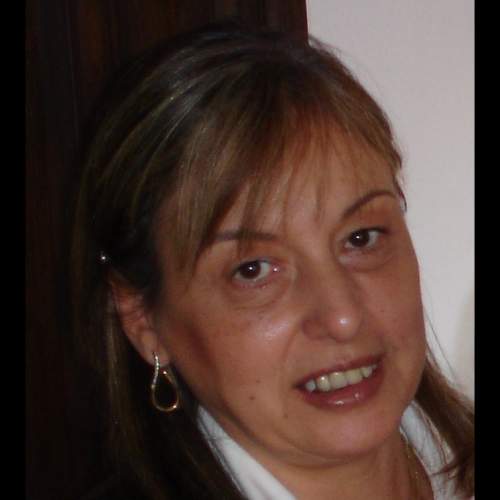
PROFESSOR, Laboratory Head
Miliou-Mparsaki Helen
EMAIL
elenmi@aua.gr
PHONE NUMBER
+30 210 529 4405
LOCATION
Dimakopoulos Hall, 1st Floor
LABORATORY
Applied Hydrobiology
ASSOCIATE PROFESSOR
Karakatsouli Nafsika
EMAIL
nafsika@aua.gr
PHONE NUMBER
+30 210 529 4429
LOCATION
Dimakopoulos Hall, 1st Floor
LABORATORY
Applied Hydrobiology
ASSOCIATE PROFESSOR
Bitchava Konstantina
EMAIL
bitchava@aua.gr
PHONE NUMBER
+30 210 529 4428
LOCATION
Dimakopoulos Hall, 1st Floor
LABORATORY
Applied Hydrobiology
ASSISTANT PROFESSOR
Malandrakis Emmanuel
EMAIL
emalandrak@aua.gr
PHONE NUMBER
+30 210 529 4401
LOCATION
Dimakopoulos Hall, Underground Floor
LABORATORY
Applied Hydrobiology
ASSISTANT PROFESSOR
Kalogirou Stefanos
EMAIL
stefanos.kalogirou@aua.gr
PHONE NUMBER
+30 210 529 4459
LOCATION
Dimakopoulos Hall, Ground Floor
LABORATORY
Applied Hydrobiology
ASSISTANT PROFESSOR
Dimitroglou Arkadios
EMAIL
a.dimitroglou@aua.gr
PHONE NUMBER
+30 210 529 4614
LOCATION
Dimakopoulos Hall, Ground Floor
LABORATORY
Applied Hydrobiology
LABORATORY TECHNICIAN
Konstantinou Georgios
EMAIL
geo.kon@aua.gr
PHONE NUMBER
+30 210 529 4406
LOCATION
Dimakopoulos Hall, Underground Floor
LABORATORY
Applied Hydrobiology

Research

Learn more about the research activities of the Laboratory

RESEARCH FOCUS

The Research Activity of the Laboratory of Applied Hydrobiology focuses on the study of aquatic organisms, in terms of husbandry, ethology, physiology and ecology. More particularly on:

  • Effect of rearing factors such as temperature, feeding regime, fish density, photoperiod, tank coloration, light density and coloration etc on aquatic organisms. Effects of experimental conditions are evaluated with hematological parameters (hematocrit, cortisol, glucose, electrolytes, enzymatic activity, dissolved gasses etc.).
  • Fish behavior is studied with a view to understand ethological and dietary demands, in relation with diets enriched with various nutrients (e.g. fatty acids, amino acids, vitamins etc), targeting towards improving fish welfare, growth rates and carcass quality. The aforementioned research is always conducted considering the protection of aquatic environment.
  • Enhancement of fish quantitative and qualitative traits during intensive production as well as the improvement of the production systems.
  • Fish traceability and authenticity trials, in order to define local fish populations with the use of modern molecular biology techniques.
  • Sustainable management of the marine environment.

RESEARCH PROJECTS

The Laboratory of Applied Hydrobiology coordinates and participates in private sector, National and European funded research projects:

  • “Brightfish: Use of yeasts and fungi in sea bream diets towards improving skin pigmentation and immune response” 2020-2023
  • “EstroFish: Development and comparison of methods for detection and quantification of phytoestrogens in fish feed raw materials, fish feed and Mediterranean farmed fish species” 2019– 2022
  • “EU-CONEXUS Research for society” funded by Horizon 2020. Call: H2020-IBA-SwafS-Support-1-2020. 2021
  • “Evaluation of feeding dry diets to red seabream larvae”. Source of funding: Private sector. 2020-2021.
  • “EU‐CONEXUS: European University for Smart Urban Coastal Sustainability” Co funded by Erasmus + Programme of the European Union. 2019
  • “The use of antioxidants in gilthead seabream nutrition”. Source of funding: Private sector. 2019-2020.
  • “Development and comparison of methods for detection and quantification of phytoestrogens in fish feed raw materials, fish feed and Mediterranean farmed fish species.” Funding: MIA-RTDI, Special Actions: Aquaculture – Industrial Materials – Innovation open to culture (EPAnEK). 2019.
  • “Structured Light-Based fish BiOmass estimator – SaLTBOx”. Source of funding: European Maritime and Fisheries Fund 2019-2022.
  • “Control of authenticity and nutrition of the Greek market with molecular identification” of the OP Fisheries and Maritime 2014-2020, co-funded under the European Maritime and Fisheries Fund – EMFF. 2019-2021.
  • “Evaluation of feeding dry diets to gilthead seabream larvae”. Source of funding: Private sector. 2019-2020.
  • “Compensatory growth and single nucleotide variation in European sea bass (Dicentrarchus labrax)”. Wageningen University and Research. ΤΝΑ funded by AQUAEXCEL Η2020. 2019.
  • Bottarga’s Chemical composition. Funded by Trikalinos Co. 2018.
  • “Blue Career Centre of Eastern Mediterranean and Black Sea (MENTOR)” funded by the European Commission EASME/EMFF. 2017.
  • “The use of emulsifiers in gilthead seabream (Sparus aurata) diets”. Source of funding: Private sector. 2017-2019.
  • “Evaluation of European sea bass larvae nutritional state”. Source of funding: Private sector. 2016-2017.
  • “Modernization, equipment update and accreditation of the Department of Applied Hydrobiology of the Agricultural University of Athens, for the control of quality and safety of fish products” funded under the Greek Fisheries Operational Programme 2007-2013, Ministry of Rural Development and Food. 2016.
  • “Exploitation of discards from the Greek seas for fish oil production and its use for experimental sea bream and sea bass rearing”, funded under the Greek Fisheries Operational Programme 2007-2013. 2016.
  • “New Agriculture for a New Generation-Recharging Greek Youth to Revitalize the Agriculture and Food Sector of the Greek Economy” funded by Rudgers the State University of Νew Jersey. 2015.
  • “Fish oil replacement in aquafeeds for sea bream and sea bass with alternative lipid sources” (2013-2015) funded under the National Strategic Reference Framework NSRF 2007-2013, General Secretariat of Research and Technology. Partners: AUA (Coordinator), NKUA, BIOMAR, ABOTIS. 2015.
  • “Development of sustainable fishfeeds for sea bass: effects of growth and chemical composition of fish” funded by Biomar Hellenic, 2014.
  • “Effect of dietary inclusion of sanguinarine on growth, physiological status and quality of juvenile gilthead sea bream Sparus aurata”. Source of funding: Phytobiotics, Futterzusatzstoffe GmbH (Germany), 2010-2011.
  • “Organic Aquaculture – Perspercives on development” Greek Fisheries Operational Programme, Ministry of Rural Development and Food. 2008

PARTICIPATION IN ORGANIZATIONS

The laboratory staff participates in National and International Organizations such as:

  • Hellenic Society for Animal Science
  • Hellenic Society of Oceanography
  • Hellenic Zoology Association
  • Commission internationale pour l’exploration scientifique de la mer Méditerranée (Comité du Plancton)
  • Hellenic Union of Biologists
  • Geotechnical Chamber of Greece
  • European Aquaculture Society (EAS)
  • World Aquaculture Society (WAS)
  • Aquacultural Engineering Society (AES)

Extension Services

Information for services provided by the Laboratory upon request

The Laboratory can carry out:

  • Testing of aquafeed raw materials – nutritional protocols
  • Fisheries studies
  • Studies of physicochemical parameters
  • Environmental studies

Infrastructure

Explore the facilities and the equipment of the Laboratory used in research and teaching

Recirculated aquaculture systems (RAS)

  • Freshwater – 1: Total water capacity: 43 m³. It consists of more than 70 tanks of various capacities and is used for educational and research activities. It is equipped with two groups of mechanical and biological filters, and three UV lamps. The system is also equipped with chillers for temperature control and photoperiod control systems. Finally, specialized air pumps distribute atmospheric air in the tanks.
  • Saltwater – 1: Total water capacity: 3,5 m³. It is composed of 24 tanks of various capacities. The system is mainly utilized for research in reproduction and aquaponics. It is equipped with 3 arrays of mechanic and biological filters, water heaters and photoperiod controllers.
  • Saltwater – 2: Total water capacity: 35 m³. The system includes 40 tanks of various capacities, and is mainly used for educational and experimental studies. It is equipped with three arrays of mechanical and biological filters, with two groups of UV lamps. Furthermore, the system is equipped with two chillers, as well as with temperature and photoperiod controllers. Finally, specialized air pumps distribute atmospheric air in the tanks.
  • Saltwater– 3: Total water capacity: 11 m³. The system includes 80 tanks and is mainly used for educational and experimental studies. It is equipped with four groups of mechanical and biological filters, and a main unit with UV lamps. Furthermore, the system includes a central chilling station and a temperature control unit. Finally, specialized air pumps distribute atmospheric air in the tanks.
  • Saltwater – 4: Total water capacity: 6 m³. The system includes 20 tanks and two groups of mechanical and biological filters, with a main array of UV lamps. The system is equipped with a central chilling system and a photoperiod controller. The specific RAS system can be used either for freshwater or for saltwater.

Water Analysis Equipment

  • The laboratory possesses all the necessary equipment (glassware, reagents, spectrophotometers, pipettes and commercial kits) for the determination of the physicochemical characteristics of both freshwater and saltwater (Dissolved Oxygen, carbon dioxide, alkalinity, ammonia, nitrite, nitrate, chloride ions, total phosphorus, BOD, COD, pH etc.)

Biochemical Analysis Equipment

  • The laboratory provides all the appropriate equipment for biochemical analysis (glassware, lyophilizer, HPLC, GC, GC-MS, gas analyzer, blood electrolytes, image analyzer, centrifuges etc) in aquatic organisms. Among other methods, a plethora of hematological parameters can be quantified (triglycerides, cholesterol, total fat, albumin, glucose, cortisol, osmolarity, hematocrit, red and white blood cells, hemoglobin, blood gases, blood pH, blood electrolytes etc.), carcass composition (fat, protein, moisture, ash), total fats, glycogen, ascorbic acid, moisture and other hepatic indices, digestive enzymes etc.
  • Stress level determination (acute and chronic) is vital for aquaculture, as stress intensity may hinder fish health and welfare. Its effects have financial impact on the farm, as well as on consumers. Stress determination may be accurately achieved via the determination of the concentrations of fish brain neurotransmitters. In the Laboratory of Applied Hydrobiology, liquid chromatography techniques (HPLC/ECD) are employed to determine the concentrations of serotonin (5-HT), its metabolite 5-HIAA, dopamine (DA) and its metabolites DOPAC and HVA, as well as noradrenaline (NA). 5-HIAA/5-HT and DOPAC/DA ratios are used to determine serotoninergic and dopaminergic activities respectively.
  • Finally, the lab conducts determination of Paralytic Shellfish Poisoning (PSP) toxins in mollusks by application of a HPLC

Planktonic and Benthic Organisms Equipment

  • The laboratory is equipped with all the appropriate hardware for the study of planktonic and benthic organisms (temperature, light and humidity-controlled chamber, high definition microscope and camera-equipped stereoscopes, image analysis, reagents) such as phytoplankton, zooplankton, mollusks and crustaceans.

Molecular Biology Analysis Equipment

  • The laboratory provides all the necessary equipment for extraction, amplification and study of nucleic acids (DNA, RNA). The equipment for molecular biology analysis is composed of a shaking incubator, refrigerated centrifuge, real-time PCR cycler with HRM, horizontal electrophoresis, nucleic acid photometer, precision scales, laminar flow cabinet, autoclave, pipettes etc)

Studies on Fish Parasites

  • The laboratory is equipped with all the appropriate gear for parasitological analysis (microscopes, stereoscopes, reagents) and preparation of fresh smears and fixed specimens

Field Equipment

All necessary equipment is available (portable instruments for the determination of the physicochemical parameters of water, water and biological material samplers, etc.) required for almost any type of hydrobiological field study:

  • Experimental fishing gear
  • GVS drop-down cameras for daytime and nighttime recordings
  • Underwater photographic cameras (UW cameras)